Grilled corn soup with basil-infused oil

Whoever invented the word cornucopia must have been looking at all the leftover cobs in my fridge. The corn is so good right now I always buy too much – six cobs per person seems to be the rule of thumb, despite the fact I really do know they’ll only eat two or three.

This silky smooth soup is perfect for  a summer lunch and a great way to use up  leftover corn (as well as  a baked potato, if you’ve got one).  The basil-infused oil is optional but basil plays well with corn and is a great contrast to the richness of the cream and the smoked paprika. If you happen to have some hot charcoal after dinner, throw the leftover cobs on for a few minutes to caramelize them a bit, Or, you can toss them on the gas grill the next day. If that’s not an option, sauté the kernels with the onion for a few minutes before adding the stock.

Continue reading

Blueberry sauce

Even the most cynical teenager has a weakness. Finding that soft spot can be difficult, especially when they are at their worst – standing there with their arms crossed, refusing to make eye contact with what has to be the worst half of the worst set of parents on the entire planet, mumbling angry, monosyllabic answers to the most innocent questions. But, even then there is always something you can say that will make them smile despite themselves. That, of course, just makes them madder. But it’s fun. I’m told this anger is just teenage angst – an inevitable  biologically driven quest for independence; it’s evolutionary, out of their control because of the hormones coursing through their veins. It’s all perfectly normal.

Nonsense. I say it’s just a good old-fashioned lack of respect and they should all immediately be sent to military boarding schools where cold showers and tepid gruel will teach them a thing or two about just how lucky they were back at home even with the stupidest, most embarrassing parents in the world. We didn’t act like that when I was a teenager. Nosiree.

But L won’t let me send them to boarding school and, since I am determined to get to the lake and pick the wild blueberries from my very own wild blueberry bushes before the birds do, I am forced to resort to the only other tried-and-true parenting technique I know: Bribery.

Continue reading

Gazpacho

Saturday was hot and muggy. The kind of day that makes it hard to imagine  it will get cold around here. But we’ve also lived here long enough to  know that  there’s a pretty good chance it will (in fact, I googled it and the average December sees zero (32 F) as a high. No need to contemplate the lows).  That’s why we found ourselves on a hot and muggy day planning our Christmas holiday in Seville. There is only one thing you can eat while you are planning your Christmas holiday in Seville on a hot and muggy day – gazpacho, Andalusia’s signature dish.

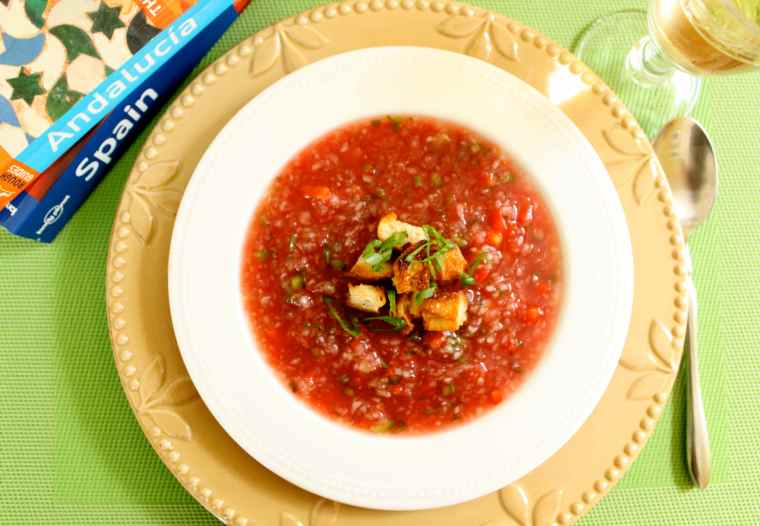
Simple is best for gazpacho, as far as I am concerned. No stocks or tinned tomato juice; no food processors, blenders, bread crumbs or soaked, stale bread. Just fresh, fresh tomatoes, cucumbers (the ones in this soup came from my garden), garlic, peppers, herbs and seasoning. A few homemade croutons and some chopped chives for garnish. And, last but not least, enough time in a cold fridge to let the flavours meld.

I think it could just about be as good as a trip to Seville, but I’ll let you know for sure in January.

Gazpacho

8 large ripe field tomatoes

2 cucumbers, finely diced

2 small (or, 1 large) Spanish onions, finely diced

1 green bell pepper, finely diced

1 red bell pepper, finely diced

1 jalapeno pepper, finely diced (remove seeds for a milder gazpacho)

4 cloves garlic

4 tablespoons chopped fresh parsley

Splash sherry vinegar (or, red wine vinegar)

A few drops Tabasco sauce (optional)

Coarse kosher salt

Black pepper

Roughly chop and process tomatoes through a food mill to remove seeds and skins and create a smooth puree. Add diced vegetables and chopped parsley to puree.  Roughly chop garlic, sprinkle with coarse Kosher salt and make into a paste using the flat of your chef’s knife blade  (or, mix in a mortar and pestle. The salt acts as an abrasive). Add garlic paste to soup. Taste. Add sherry vinegar (more or less to taste) Season with salt and pepper. Add Tabasco, if using. Refrigerate for four hours or overnight (preferred) to meld flavours.  Served chilled with croutons sprinkled on top. Keeps for one day in the fridge.

Corn on the cob with feta and mint

The annual appearance of the big yellow “Sweet Corn” signs on roadside farm stalls is always a moment tinged with sadness. When the corn is ready and the first crickets start to sound, you know it’s the beginning of the end of summer. The corn will be with us until the kids go back to school and then, like the season, it will lose a little bit of its glory as each day passes.

“So sad,” L says every year when I mention this. Then she rubs her fingers together as if playing a tiny violin to accompany my sorrow. I think she’s mocking me. Maybe that’s what the crickets are doing as well. Next year I’ll just keep quiet.

The first corn also reminds me of my son’s favourite summer meal when he was four or five. When asked what he wanted for dinner any time between mid-July and early September, he would almost always reply: “Corn on the cob and meat on the cob!” Corn and barbecued ribs have made regular appearances together on our table ever since.

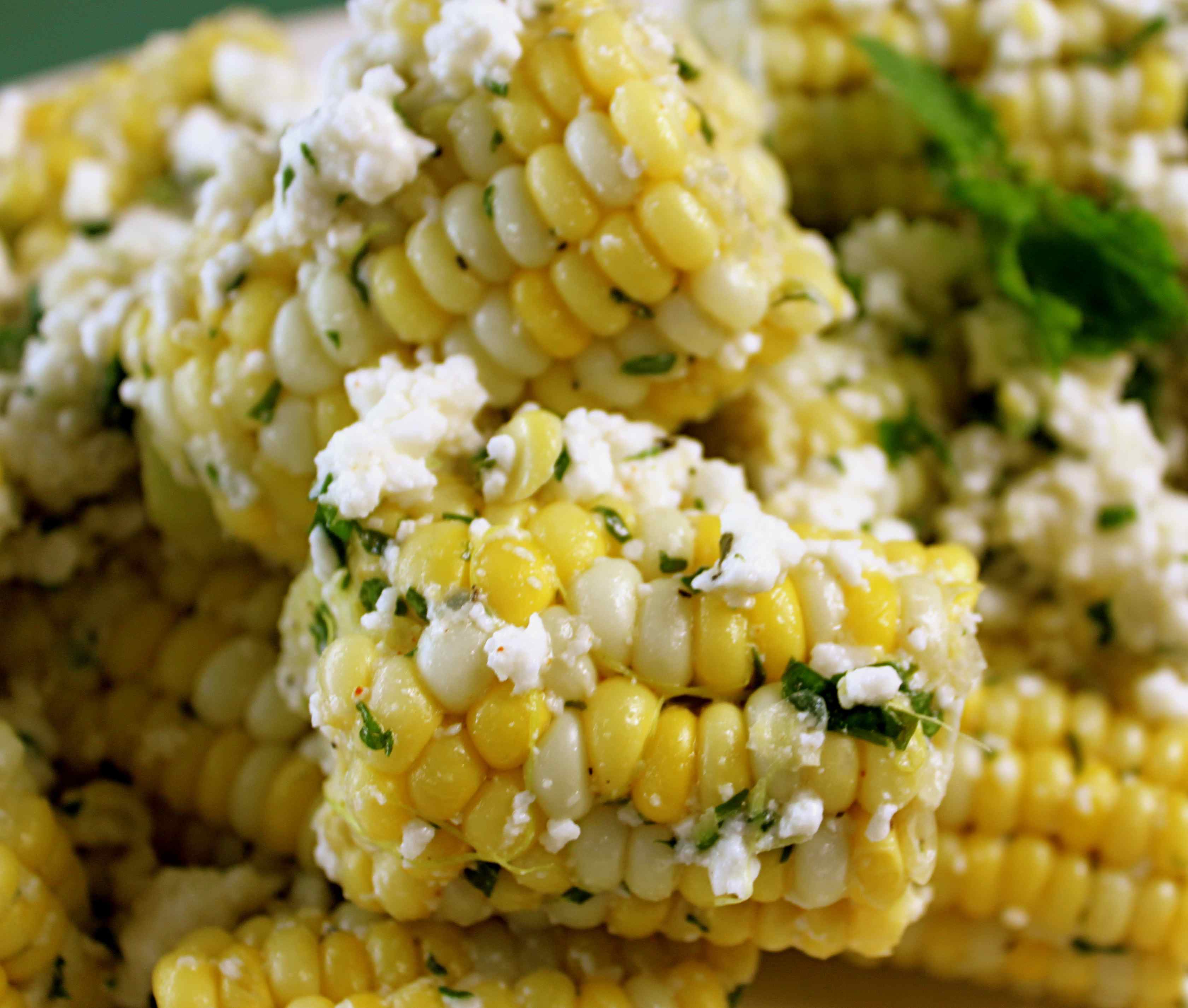
The corn we bought last weekend needed a bit of help. It wasn’t quite sweet; a few of the cobs were underdeveloped. Feta and mint, the star taste combination of the summer in our house (great with watermelon) came to the rescue. I mixed corn’s old ally, butter, with chopped mint, a little cayenne, some black pepper and lots of crumbled feta and tossed with cooked cobs. The butter added sweetness, the feta some savoury depth and saltiness and the mint made it taste just a little like summer may never end.

Corn on the cob with feta and mint

12 cobs of fresh corn

1/2 stick of unsalted butter

1/2 cup mint, chopped

1/2 cup feta cheese, crumbled

1/8 teaspoon cayenne pepper

Freshly ground black pepper to taste

Shuck and boil the corn in salted water for 3-4 minutes until tender. Meanwhile, mix the butter, mint, cayenne and black pepper into a paste and place in a large bowl. Cut the cooked corn into 3-4 inch pieces and toss with the butter/mint mixture until the butter is melted and the corn is well coated. Sprinkle with feta and toss again lightly. Serve immediately.

Chimichurri

Almost exactly 20 years ago, a boss gave me a copy of The 7 Habits of Highly Effective People. I am very proud of that book because it has never been opened. Not even a page. For all I know, it has an inscription that reads “For the young man who exemplifies each of these habits….blah, blah, blah.” But I doubt it; somehow I think eschewing self-help books is not one of the habits. My former boss must have read the book, however, as he avoided actually serving jail time and sped through the bankruptcy proceedings like a pro. (Not all my former bosses have been this lucky.)

Anyway, I have enough habits of my own, none of which will ever be in a book (unless it’s a book about highly peculiar people). One of those habits involves my choice of summer reading, which consists entirely of a winter’s worth of unread Vanity Fair magazines (burned ceremoniously at the end of the season in – you guessed it – The Bonfire of the Vanity Fairs) and cheap paperback novels.

And I mean cheap. The ones I pick tend to look like they’ve been read a million times, left out in the rain at least twice and used, on occasion, to prop up a sagging cottage deck.  Those are the kinds of books that can stand up to the rigours of hammock life or endure a trip to the swim raft with nothing but a ziplock bag between their battered pages and the Deep.

I’ve also developed a habit of  building our cottage menus around the theme of the book. There may not be a single highly effective person who does this, but we’ve had some pretty good cottage meals that we might not otherwise have tried (although, I don’t recommend very long books – the summer I read Paul Scott’s The Raj Quartet my family started to complain of curry fatigue. Novels set in medieval prisons are also a challenge).

This summer’s first book is a Nazi spy thriller, which might have led to a season of schnitzel and wursts (or worse), except that the book is set in Argentina and that means barbecued – grass fed and pampas grown – beef.  We’re a little short of pampas around here, but as luck would have it, I happen to have a freezer full of excellent grass-fed beef. Now, I’m just waiting for my mail-order gaucho outfit and I am all set.

No table in Argentina would be ready for dinner (which people don’t even start thinking about until 9 pm, according to my novel) without a bowl of chimichurri, the tangy, spicy green sauce for which there are as many recipes as there are Argentinians. At its most basic it is made from flat-leaf parsley, garlic, red wine vinegar, oil and a little chili but feel free to experiment. Some people even add tomatoes to make a red version of the sauce.

Here’s my version. Be careful, it can be habit forming.

Continue reading

Watermelon and feta salad

Nigella Lawson may not be the first person who comes to mind when you want to turn down the heat (she tends to have the opposite effect on me), but this salad is a godsend on hot and sticky evenings when even opening the fridge seems like too much effort in the kitchen. Simple, sumptuous and surprisingly refreshing.

Sweet, juicy watermelon gets a savoury boost from salty goat’s milk feta and black olives. Black pepper adds just a touch of heat that complements the watermelon well. Mint and lime keep things bright and fresh. Add a little red onion for some crunch and you have a colourful, exotic meal that keeps things cool even when the mercury is rising.

And try to remember – even as I remind myself – it’s not Nigella’s dulcet tones or her flirtatious glances or even the way (I imagine) she handles a watermelon. No, it’s not her, it’s the humidity.

Watermelon and feta salad
(measurements are approximate, adjust to taste)

1 small red onion, halved and sliced thinly
Juice of 2-4 limes
1/2 small watermelon, in bite-size cubes (rind removed)
8 ounces feta cheese, in bite-size cubes
1 bunch flat-leaf parsley
1 bunch fresh mint, chopped
3 ounces black olives, pitted
3-4 tablespoons olive oil
Freshly ground black pepper

Toss onion slices in lime juice (the number of limes will depend on juiciness) to temper the onion’s bite. Set aside.

Tear parsley leaves from the stems but do not chop. Combine parsley with watermelon, feta and mint.

Add onions and lime juice. Drizzle with olive oil and add freshly ground black pepper. Toss ingredients together with your hands.

Fresh fig and strawberry jam

This is the time of year when bounty can become a bit of a burden. Our counter is groaning under the weight of fresh produce. Who decided it was a good idea to buy four pounds of strawberries and four pounds of cherries at the same time? For the third day in a row? And, what about the radishes and the lettuce and the Japanese turnips? Who’s going to eat all those?

You really can get too much of a good thing. Six months of winter (followed by six months of bad ice, as the old Canadian joke goes) leaves me craving fresh food, especially fruit and I always buy way too much, especially berries. Especially strawberries. We now have enough berries to keep a family of bears going through next April.  But I blame Marysol for the figs. Encouraging people to buy huge flats of fresh – delicious but highly perishable – figs when they have counters, fridges and tables full of other fruit they’re trying to eat their way through is simply reckless.

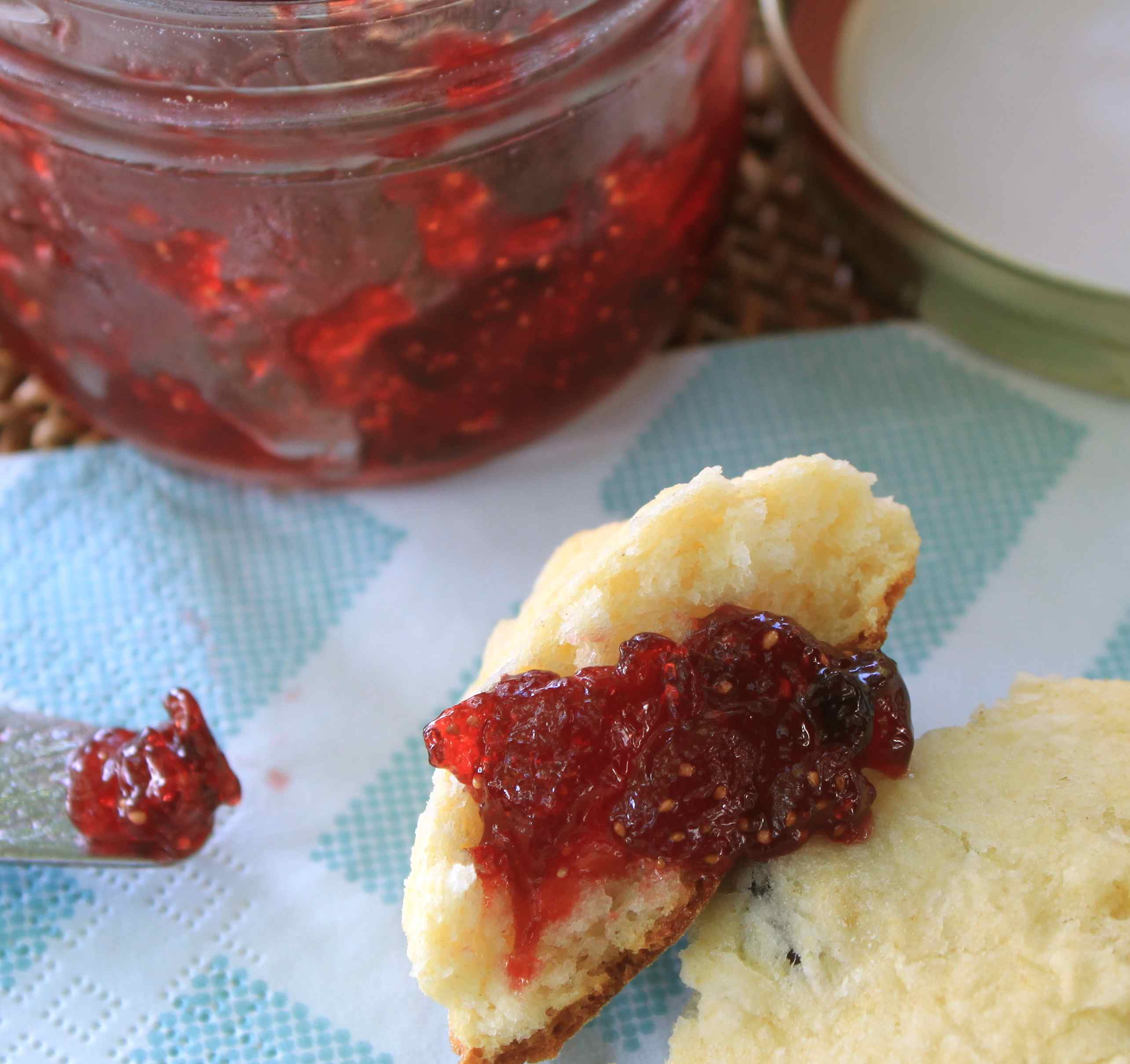
Fortunately for everyone, figs and strawberries get along just fine in a jam. This one, from The Complete Book of Small-Batch Preserving By Ellie Topp and Margaret Howard, is equally at home on homemade scones or next to a cheese plate. Make lots, winter is long around here.

Continue reading

Pork paprikash

Baby, it’s cold outside.  A summer cold snap calls for something with a little more substance than salad. Something saucy and meaty and noodley.

This paprikash fits the bill nicely; a rich, but not too rich, sauce made with red wine and fresh tomatoes and lots of heat from pungent Hungarian paprika and cayenne. Lean pork tenderloin is complemented by a good jolt of citrus that gives it a fresh, summery punch.

I adapted this recipe from Olaf’s Kitchen by Chef Olaf Mertens, a used-book sale find I was suspicious of because it was in pristine condition (good used cookbooks tend to be splattered and stained). It was worth the $2 for this recipe alone. Mertens calls for veal tenderloin but I used pork. The only other substitution I made was  a teaspoon of dried oregano for a tablespoon of fresh marjoram, which I was too lazy to go out and buy. As well, I may have used a tad more sour cream than the 1/4 cup Mertens called for, but who’s to know?

Continue reading

For the wine-loving (meat) smoker

Saw these in a little shop in our village and immediately picked up a bundle without even looking at the price, which turned out to be around $7 with tax. “They make a perfect hostess gift,” the sales clerk said. “Maybe so,” I replied, “but these are for me.”

Okay, there’s one born every minute. I soaked two of these – they are made from the staves of used oak wine barrels – in water (the label suggested soaking them in wine as an alternative. Yeah, right) and put them on the charcoal grill when I made a flank steak for four out-of-town colleagues looking for a free meal. Have to say, I couldn’t taste the wine (in the meat at least). The oak, however, gave the meat an intense smokiness and everyone raved about the flavour. So, we decided to do our best to empty another barrel for future barbecues.

You say tomato, I say Kumato

We’re just weeks away from fresh field tomatoes. But, I can’t wait. I have a craving for my favourite classic steakhouse salad – a dish served all year round at the restaurant but best eaten only when meaty, field-fresh beefsteak tomatoes are in season. Then, it’s a meal all by itself – sweet tomatoes with red onion, a simple vinaigrette and lots – lots – of crumbled blue cheese. I’ve tried to extend the season beyond the optimal six to eight weeks of prime tomato season (during which even L joins the kids in saying “not again”)  by making my version with hothouse tomatoes  but it just isn’t the same.

Then along came the Kumato. Bred in Europe, this small, thick-skinned and meaty tomato variety is hothouse grown, sure, but it has the sweetness of a field-grown tomato. The only thing that might keep it  from really taking off is its colour, brown (bit of a marketing challenge there). But they say it’s very popular in Europe and is now becoming widely available around here thanks to a regional grower, which, as far as I can tell is the only one outside Europe. If you are unfamiliar, you can read more about this “tomato with a tan” (as at least one headline writer called it) here.

Or, you can just pick some up and get a little taste of August before the end of June.

Continue reading