Duck breast with raspberry-port sauce

Duck (plated2)

I am not sure why we don’t eat more duck; it’s juicy, it’s lean (once most of the fat layer is rendered in the cooking process) and it’s easy to make, especially the breast.

Except for the time the whole bird I was roasting on the barbecue rotisserie caught fire (there is so much fat at just under the skin that they make great torches; mine burned for 20 minutes), I have had great success with duck.

This recipe is tried and true and it’s easy enough for a weeknight dinner and elegant enough for guests. Fortunately, it does not call for flambé.

Continue reading

We’re eating more beets

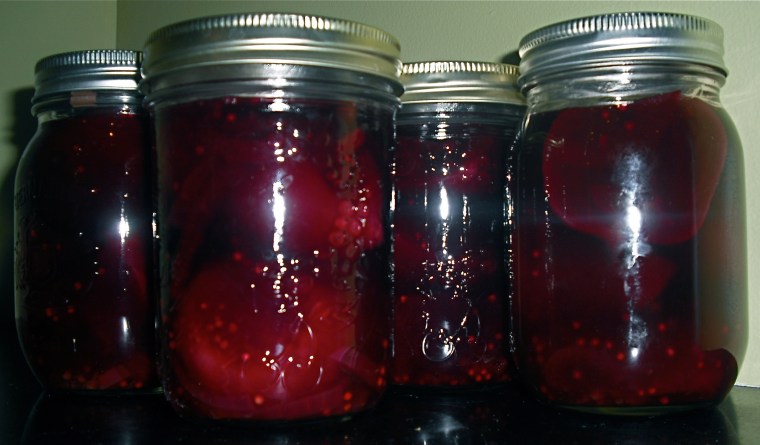
Beetsjar2

“You’re going to give those away, right?” L asked as I stood admiring the row of jars, jewels really, still hot from the canner. I had been expecting some resistance to the notion of a crowd of pickled beets lined up in the cold cellar just waiting to sneak themselves onto the menu and into the mouths of my unsuspecting family. But, I hadn’t been prepared for outright rejection.

We generally have an unspoken understanding in our house about what I am allowed to serve to others and what I must eat alone. I am the sole consumer of liver, for example.  Over the years I have managed to sneak the odd mushroom on to L’s plate and lamb has made limited dining-room appearances. But, it’s still a tough venue for collard greens.

Continue reading

Goat cheese stuffed quail with pomegranate glaze

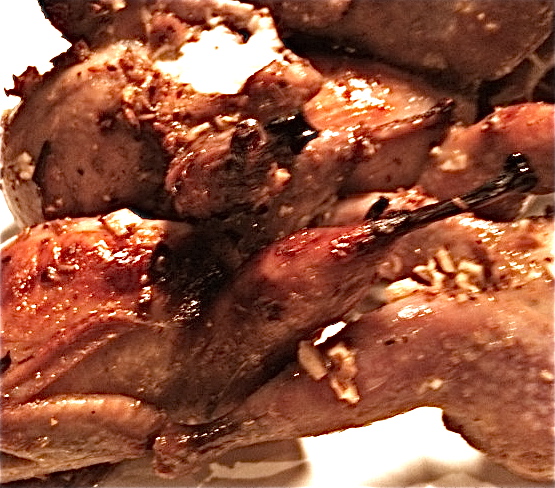
Quail2

I find quail a little bit intimidating because I really don’t know how to eat them. There isn’t a whole lot of meat to begin with and picking out all the flavourful flesh is difficult without getting your hands into the action.

Fresh quail are cooked fast and hot in a 500 F oven for about 20 minutes total. I made them for a slightly unusual Saturday lunch for my family and stuffed them with a little goat cheese mixed with chopped cooked bacon, salt and pepper. You don’t need much; these birds are small.

I made a simple marinade of equal amounts (a couple of tablespoons) olive oil, honey and pomegranate juice mixed with a little chopped garlic and  a tablespoon or so of freshly ground cumin to accent the quail’s slight gaminess. (I adapted this marinade from a recipe Mark Bittman published on the New York Times. He used orange juice instead of pomegranate and didn’t stuff the birds.)

I washed and salted 6 quail, rubbed them inside and out with olive oil and salt,   marinated them for 20 minutes or so and then reserved the  marinade to  glaze half way through cooking.

I stuffed the quail with the goat cheese and bacon mixture and arranged them close together in a small oven-proof dish. They baked for 20 minutes or so until they were done but still pink.

Quail is best a little rare like duck. I served  it with wild rice and some sauteed mushrooms.  We all used our fingers.

A trickless treat

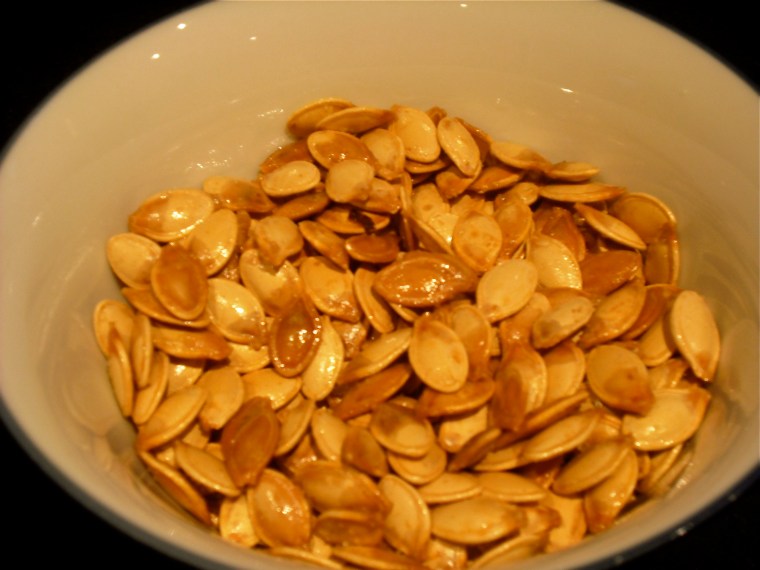
pumpkin seeds

My sweet tooth fell out years ago and my favourite part of Halloween has nothing to do with the high-fructose corn syrup that will have my daughter on a high-fructose high for the next week or so (unless the dog gets the candy again, in which case we get low-fructose histrionics). Halloween just wouldn’t be Halloween without toasted pumpkin seeds.

I am eating them right now, less than an hour after picking them out of the slimy innards of our now-illuminated jack-o-lantern.

Just pick the slippery seeds out of the pumpkin guts, give them a good rinse and remove any pumpkin flesh. Put the oven on to 325 F.  Dry the clean seeds on a towel for a few minutes and put them in a bowl to coat with a little olive oil.  Place them on cookie sheet in a single layer and sprinkle with salt. Bake them for about 20 minutes or until they are golden brown. Eat them while they’re hot.

Better than Smarties any day.

The retro pantry, part two: oatmeal

oatmealbowl

Rhianna P’s guest blog didn’t tempt me even for a minute to run out and buy a jar of Ovaltine, but it did get me thinking of the comfort foods of my own youth. And, for me, a bowl of milky sweet (with a hint of saltiness), porridge in the morning always makes me feel like a kid again.

If I could find someone to make it for me, I could lie in bed breathing in the earthy aroma of cooking rolled oats on a rainy, dark October Saturday morning and pretend I was 10 again. But I am forced to act my age and make it myself since no one else in my family will go near oatmeal unless it’s in a cookie.

Heaped with (too much) brown sugar, which is better if it’s a little lumpy, and drowned in milk, it’s the only meal I know of that you can actually feel sticking to your bones.

Continue reading

Guest blog: the retro pantry

ovaltine[1]I haven’t even seen a jar of Ovaltine in decades, but guest blogger Rhianna Padamsey is reliving her youth with this look at the chocolatey drink. – ska

The onset of fall inevitably conjures up a variety of images: scarves, long slow braises, extra blankets, changing leaves, pumpkin spice lattes.. However, it’s not often – not these days anyway – that one associates fall with the consumption of a nice, hot mug of…Ovaltine.

Remember Ovaltine? Yes we know that the jar is round and the mug is round and that “they should call it Roundtine” but, other than that, what do we really know about this strange, yet enduring powder in the jar with the orange lid in the back of the pantry?

Um…nothing.

To me, Ovaltine was that weird drink my mother would drink before bed. I remember it would sit in the pantry, depleting slowly enough that it inevitably hardened into a solid mass in the bottom of the jar and, god-willing, made its way to the trash. Sure, it kind of smelled and tasted like chocolate, but something about it was always slightly off. No?

That’s because it isn’t quite chocolate. Sure it contains a touch of cocoa powder but at its core, Ovaltine is, in fact, a malt beverage. And what is malt? I have no idea, but I thought it would be worthwhile to investigate the culinary value of this drink powder that has been in production for over a century.

Let me preface this by saying that although the flavour of the Ovaltine is slightly muted for my taste, and I still can’t accept it’s not quite chocolateness, this cake is smooth, rich and satisfying and really,
It sure beats using the Ovaltine jar as a door stop.

Continue reading

World Series fries

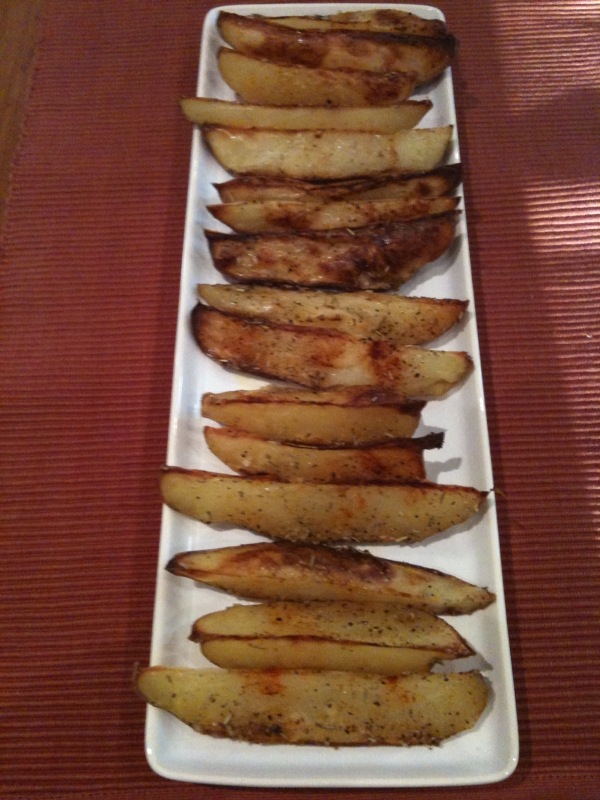
oven fries

As a baseball fan who supports another team in the American League East, I’d like to trim the fat off the New York Yankees payroll. But since I’m powerless to do that, I settle for trimming the fat off some New York fries.  This recipe is almost as easy as figuring out which players used steroids.

Continue reading

Tuna for two

Tuna3

I never thought that almost-raw tuna could be considered a comfort food, but I’m coming around. On busy weeknights (and even the odd weekday lunch when L and I sneak home for a bite) this straight-forward dish is a light and elegant meal that I find myself craving.

Done right, tuna is a rich but healthy treat. I grill it on the stove-top grill for a few minutes either side. You can pan sear it or put it on the barbecue as well, but just don’t overdo it. It’s hard to resist the extra few minutes because you (I, at least) can’t believe it’s fully cooked.

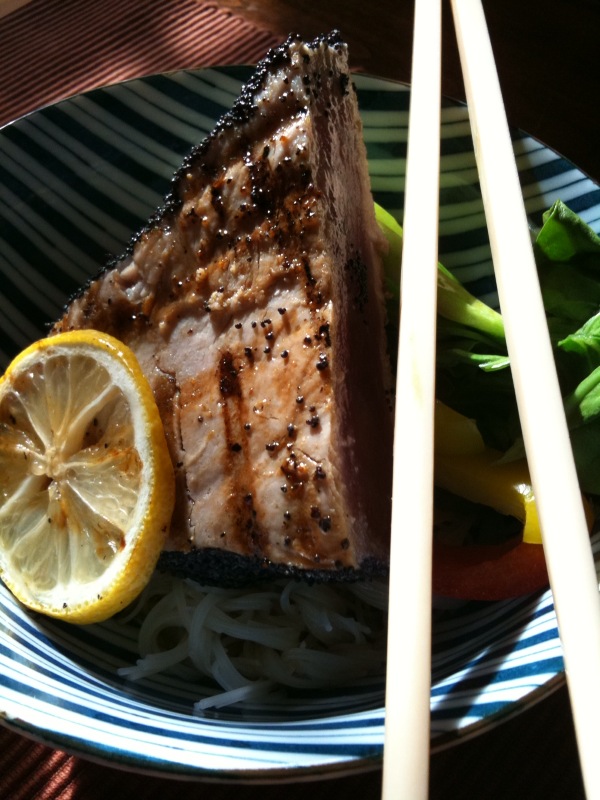
But it’s not fully cooked, and that’s why you buy sushi-grade tuna; it should only be cooked at the edges. The middle is a creamy, but not fishy, semi-raw delight. “Blue” they call it in the restaurants, even though it’s red.

This dish is something I made up for a surprise  lunch for L.  She loved it so much that it has become a regular meal around our house.

Tuna1]

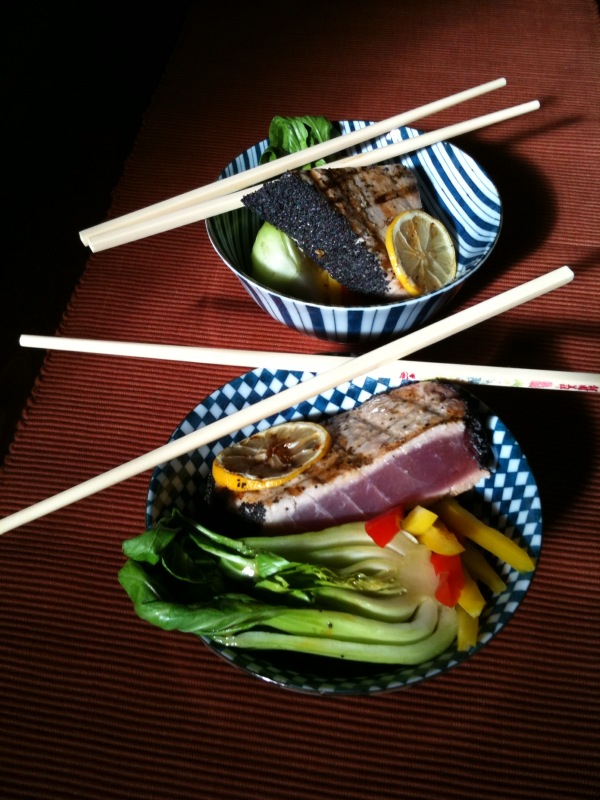
Tuna with rice vermicelli, baby bok choy and two peppers (red and yellow – for colour).

Start the grill, heat a pan or, check the barbecue to ensure the coals are white and still very hot.

Put a large pot of lightly salted water  on to boil.

Roll  the edges of the tuna (it should be an inch, preferably 1 and 1/2 inches thick,  and very fresh) in poppy seeds or,  ground black pepper and rub all over with a little olive oil.  Salt lightly.

Cut the baby bok choy in half and wash well. Cut the peppers into half-inch slivers.

Whisk a few tablespoons of olive or canola oil with a splash of rice wine vinegar and some soy sauce (roughly equal to the rice wine vinegar).

Place the vegetables in a large colander and place the colander on the pot (no need to cover).

Let the vegetables steam for half a minute or so and then put the tuna on to cook. You don’t want it to overcook so turn it after a minute or so. Then turn it again a minute later. Two minutes or so per side should do it and it you turn it, you’ll get nice grill marks.

When the tuna is done (it should be very red except for a quarter inch or so on the outside), set it aside and toss a handful of rice vermicelli into the pot. Turn off the heat.

Slice a few slices of lemon and place on the grill.

After a minute or so, remove the noodles and divide into bowls. Arrange the vegetables on top and drizzle with the dressing. Place the tuna on top and garnish with grilled lemon slices.

Then, see if you can resist making in again.
Tuna4

Have on hand: curried raisin jelly

raisincurryjelly

I make a couple of batches of this simple jelly every year because it helps out in so many ways. I use it as a glaze for pork or chicken. Mixed with white wine and a little stock it is a great braise for carrots or squash (I reduce it to a thick glaze after the vegetables are cooked). A friend uses it to top bison burgers.

We use this jelly by the jar whenever we put out cheese for unexpected guests (and expected ones) and I love it with scones and even pickled herring.

I preserve  this so I can keep it in the cold cellar, but you can easily keep it in the fridge – it won’t last long.

Continue reading

Bacon and eggs, Italian style

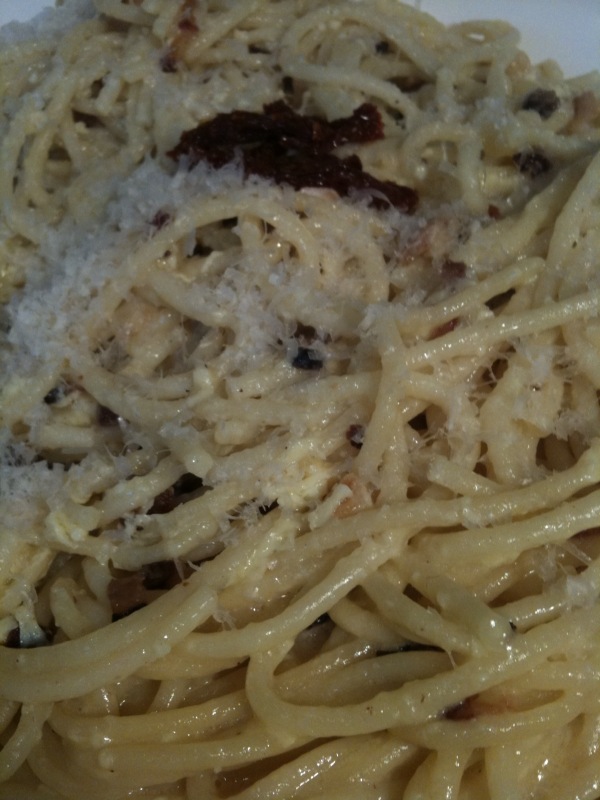
Bucatini carbonara with eggs, cheese and fantastic artisan bacon

Bucatini carbonara with eggs, cheese and fantastic artisan bacon

We are lucky to have a great source of artisan bacon (among many other delicacies) in our neighbourood but it’s probably too close (and too delicious) for our own good. I often buy a pound a week and that’s raised our consumption by at least four times what we used to eat when we bought the water-laden supermarket kind.

Nevertheless, I have no regrets; It’s nitrate free, I drain off (most of) the fat and eating it supports the local conservation of heritage pig breeds, in this case Tamworth and Large Blacks.

But a pound a week is a lot for our family considering that we try to have a couple meatless dinners through the week. And, because it’s nitrate free, this bacon doesn’t keep for more than a week if it’s sliced. So, I sometimes find myself with a half a pound or so leftover or a few week’s worth of frozen rashers looking for a way to get on the menu. Making bucatini carbonara is a great, fast and delicious way to use up that bacon.

Continue reading