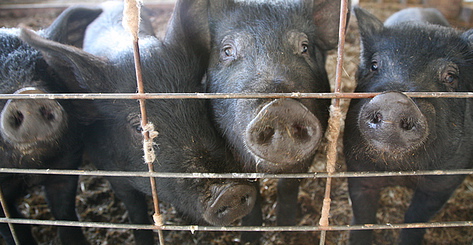
A quick shout out for our farmer, Barbara Schaefer, (we’re members of her CSA – Community Supported Agriculture – program) whose Large Black pigs smiled up at us in our local paper this morning (as did Barbara). I’m just glad we got ours in the freezer before the rush starts. If you’ve never eaten pork from Large Blacks, get going; the meat is dark and delicious and marbled with fat that gives it a moist texture that you just don’t get in “modern” shed-raised hogs. Barbara’s pork was the star ingredient of my Christmas Eve tourtière and will appear in this space again (in various recipes) in the near future.
A simple spinach salad
The sound the bathroom scale made as I stepped gingerly on to it the other morning could have been a groan or it could have been a low chuckle. It’s even possible it was a knowing sigh. The only thing that I know for certain was it didn’t sound surprised. And, as I stared down at the little indicator arrow quivering with the strain, I had an inkling where some of the five pounds of butter I bought just before Christmas had ended up.
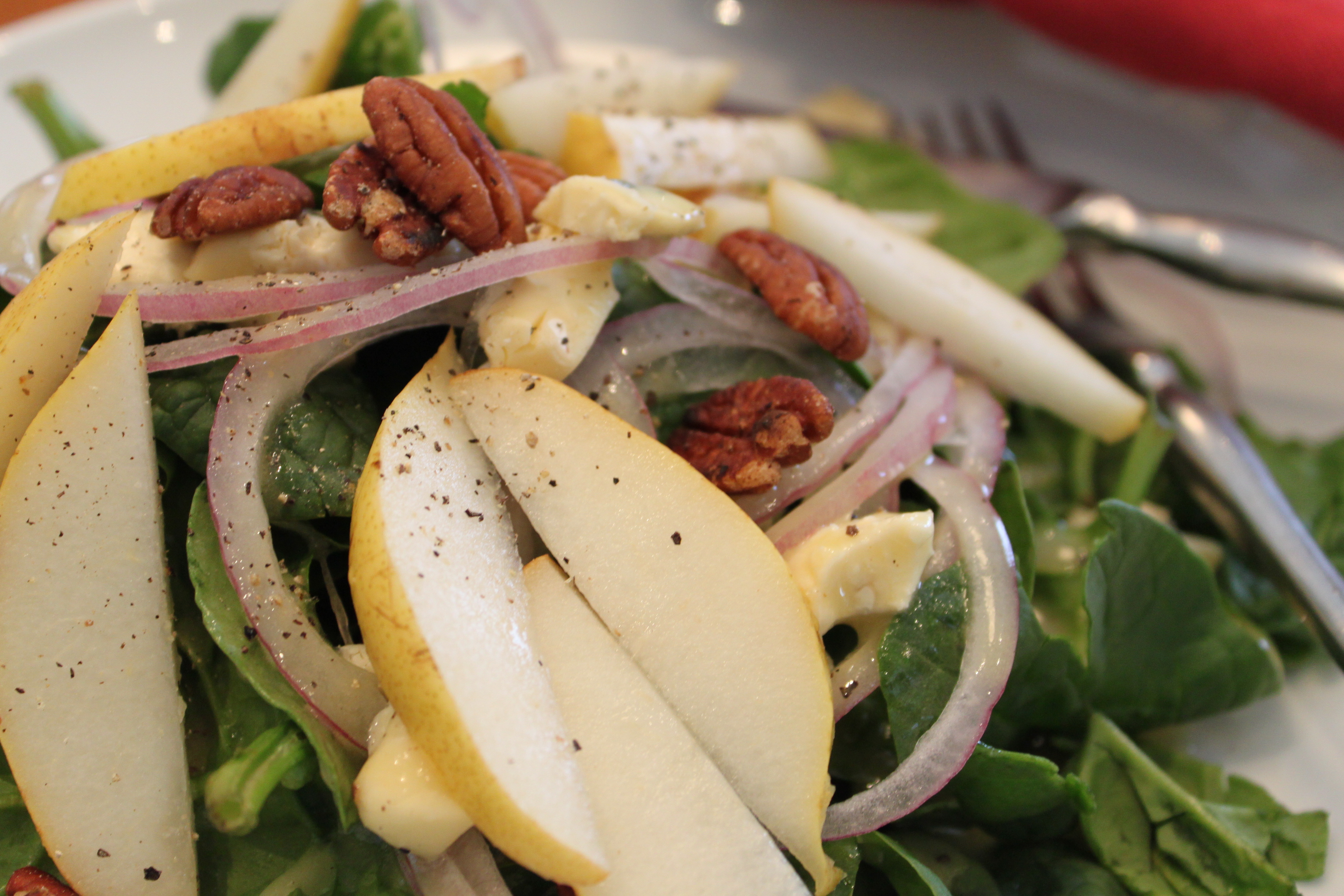
The holidays are officially over and it’s high time for something without gravy. This simple salad was our first of the season and it was a great-tasting start to the New Year, even if it was a few days overdue.
I wouldn’t say this is the lightest salad I’ve ever made, given it has nuts and cheese, but it was substantial enough for a dinner while green enough to be considered resolution compliant. The sweetness of toasted pecans compliments the bitter edge of the spinach (walnuts are also good) and pears and blue cheese always work well together. I used gorgonzola but any decent blue cheese would do.
Fish cakes with anchovy caper sauce
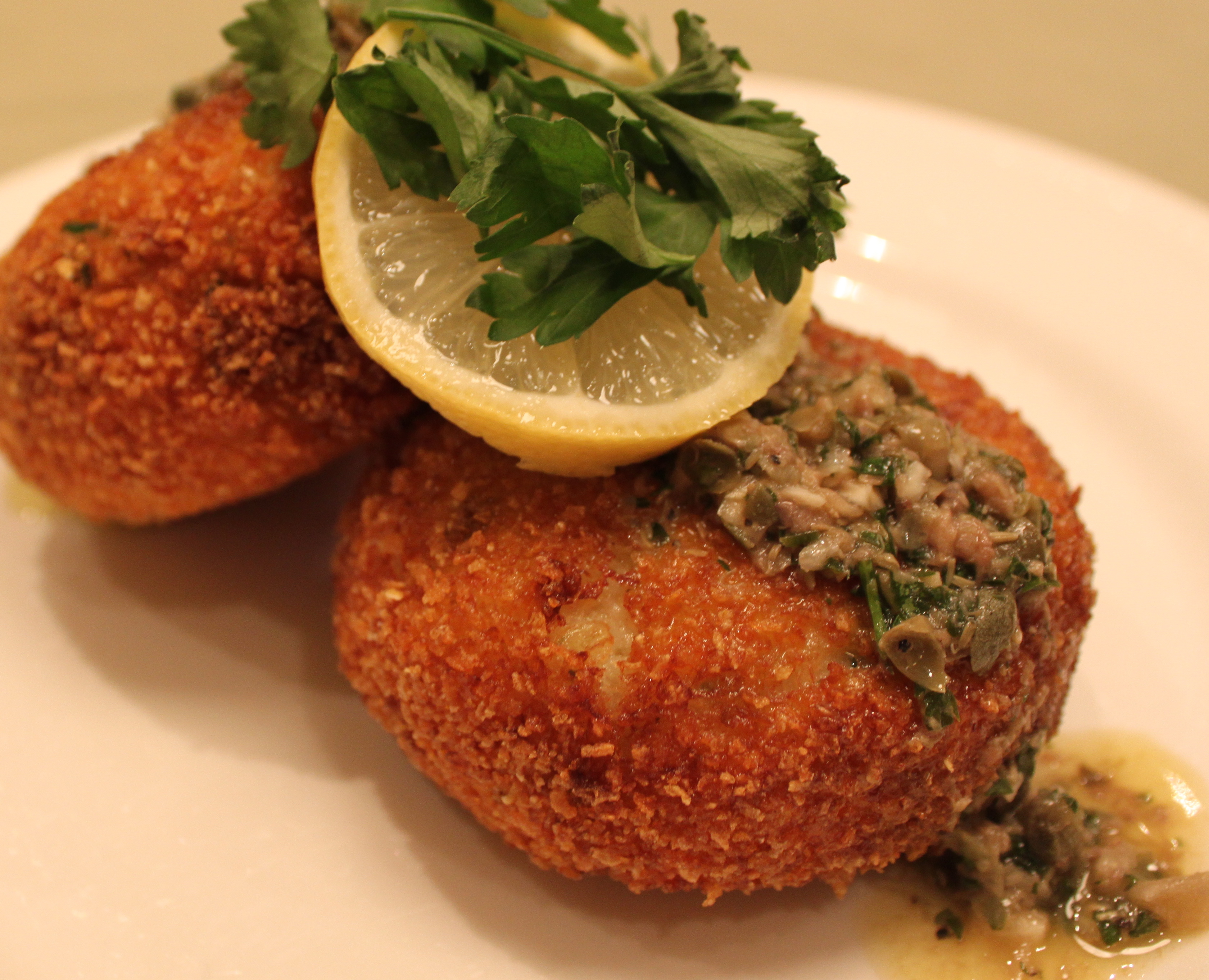
It’s a shame to associate these fish cakes with leftovers. They’re too elegant and too good. It certainly is not a word we use around our house, where our kids won’t eat anything with the “leftover” stigma attached. I have to hide the mashed potatoes at the very back of the fridge (behind other untouchables like plain yogurt or tomato juice) so the kids don’t spot them.
Besides, these fish cakes come with a ringing endorsement from a good friend who is from Prince Edward Island, a place where both fish and potatoes are highly regarded. I quote directly: “Those were the best fish cakes I’ve ever tasted.”
Good mashed potatoes are the key ingredient here. You could swap out the fish for ham and cheese or even leftover turkey, but if your potatoes aren’t fluffy light and creamy, you’ll end up with hockey pucks. I prefer a corn flake crumb crust because the extra crunch of corn flake crumbs contrasts beautifully with the soft, almost molten centre.
I have topped these with any number of sauces (Hollandaise, curried mayonnaise, tomato) or just plain lemon juice, but a simple dressing of olive oil, lemon, garlic, parsley and briny capers and anchovies gives it Mediterranean brightness that’s perfect for a dark winter week night. Everything has been previously cooked so make the patties fairly thick so the centre stays creamy. Serve with steamed vegetables or a side salad.
Chipotles in adobo sauce
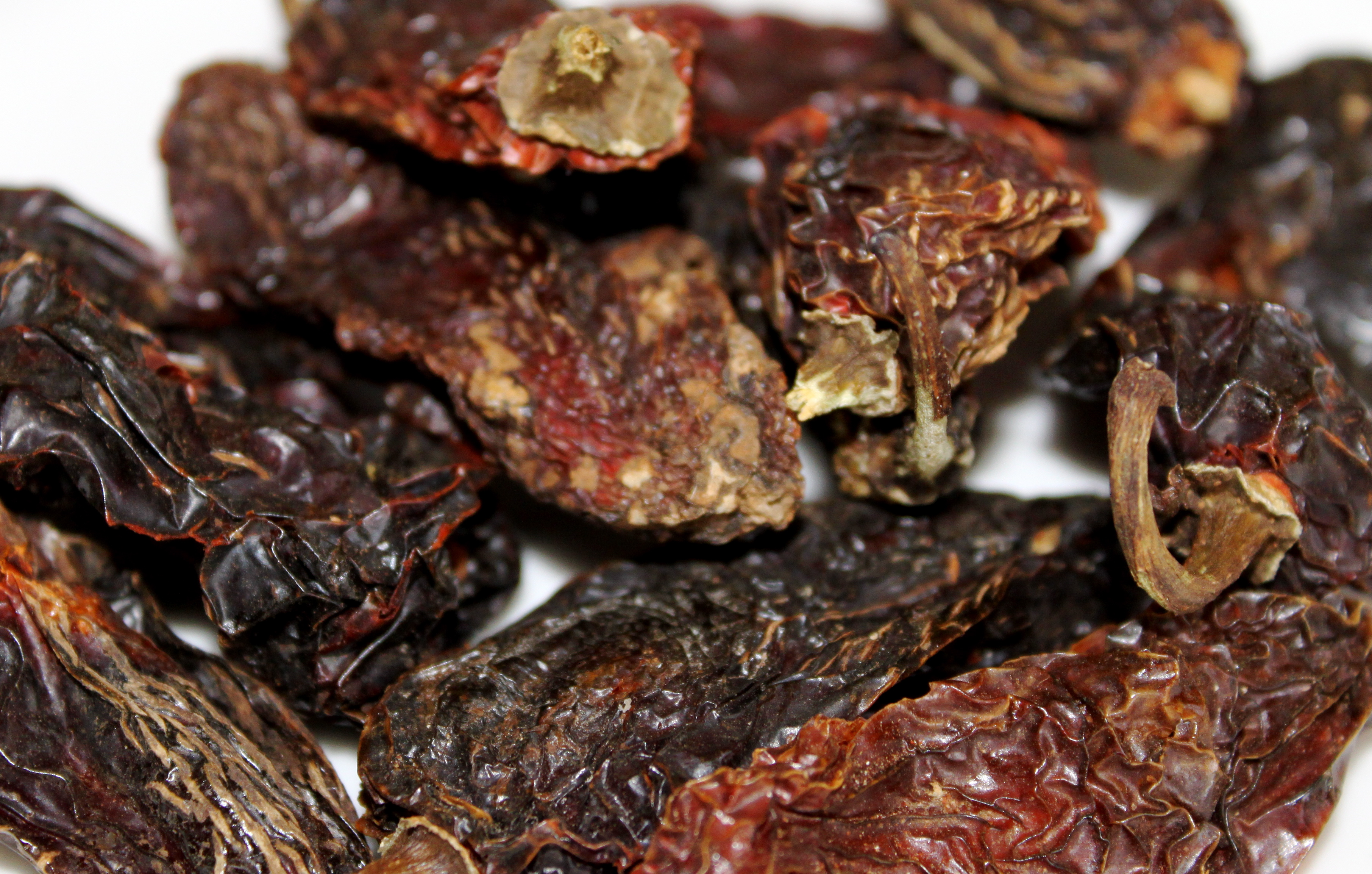
Dried chipotles – smoked jalapeno peppers – are the ugly ducklings of the pantry. Of all the other ingredients I have on hand, only sundried tomatoes come close to looking this inedible. But just open the jar and you know immediately that these are swans. Just the smell of this exotic, smoky, slightly fruity pepper is worth having them on hand. Mine sat on a pantry shelf, undisturbed except for the occasional whiff, for months before I started to figure out how to use them.
Long confined to Mexican kitchens, chipotles have become common across North America and have started to make their way on to menus that aren’t considered Mexican or Southwestern. Nowadays, just about everybody knows how to pronounce chipotle and almost no one laughs when you say it out loud.
There are two main kinds of chipotles; chile meco , which are tan or beige and very smoky, are less common than the morita variety, pictured above, which are more widely used outside of Mexico.
An easy way to start using these versatile chilis is to make chipotles in adobo sauce, a spicy, smoky condiment that can be added to soups, sauces, dips and stews for a little zip. I recently tasted, and am itching to try recreating, a chipotle Hollandaise sauce that gave a whole dimension to eggs Benedict.
The bird: brine, not time, saves mine
Roasted chestnuts
Every Christmas tradition we have was invented at some time or another. Even the holiday itself was created by the Church so the pagans wouldn’t have all the fun under the mistletoe at the winter celebration of Yuletide.
Much of our “modern” Christmas is a 19th-Century creation and we still measure the holiday against the Victorian ideal (albeit with Xboxes, plasma screens and iPhones, instead of hand-knitted socks and lumps of coal). And everyone knows the real Santa Claus was invented in the 1930s to sell Coca-Cola. Christmas itself didn’t even become a holiday in the United States until the 1870s.
All you have to do to make a Christmas “tradition” stick is make people believe that it has been around forever.
So, with that in mind and the Spirit of Christmas Past guiding me, let me present my family’s traditional roasted chestnuts.
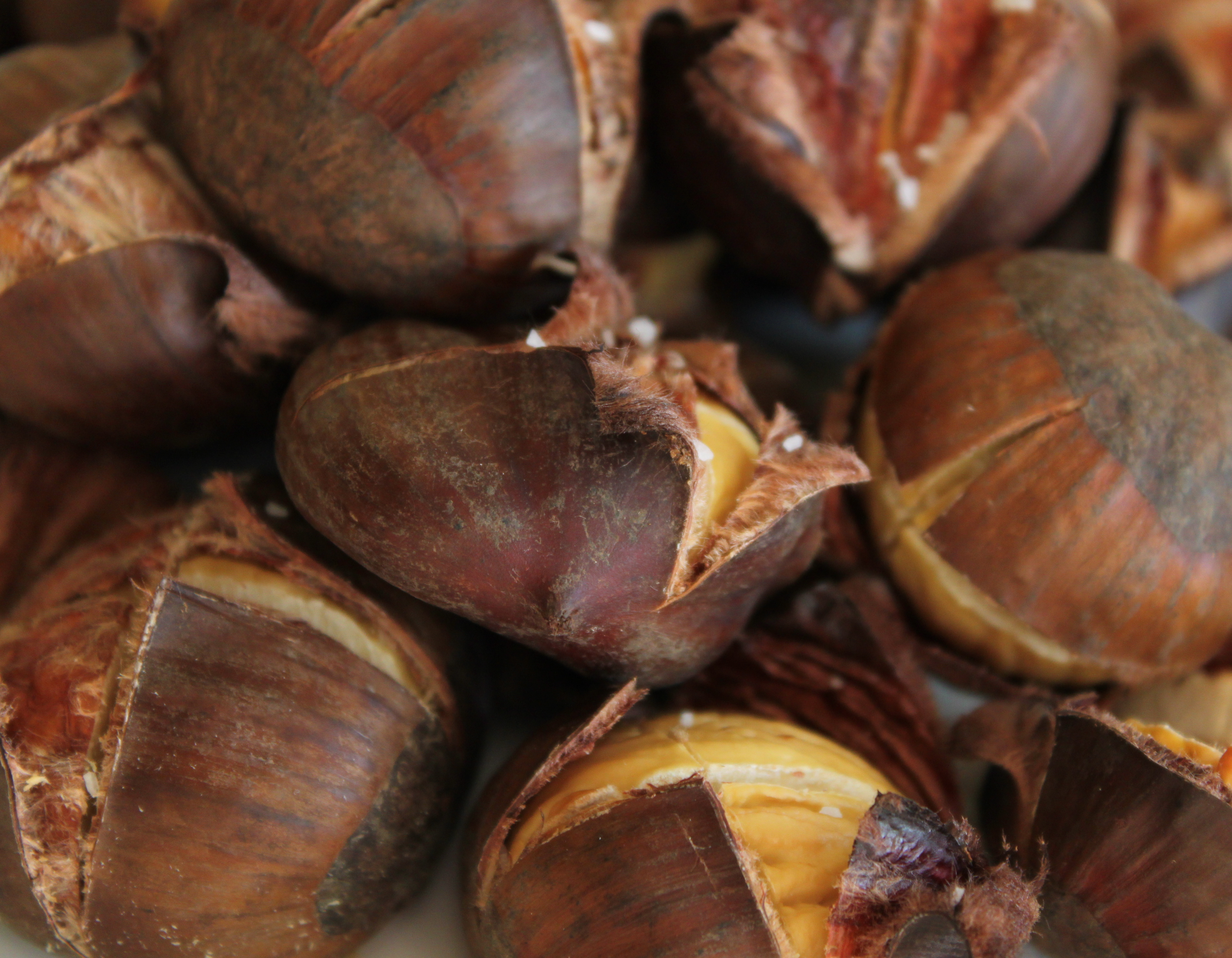
If you have a perforated pan designed especially for roasting chestnuts, great. But it’s ok if you don’t; roasting chestnuts in the oven is really easy. In fact, this is about as close to fast food as you’re going to get at Christmas. Simply preheat the oven to 425 F. The score an X through the top of each chestnut (make sure you do this on a towel or you will risk your fingers – chestnuts move around). Scoring ensures that the chestnuts won’t explode.
Roast for 15-20 minutes (they will dry out if left too long), sprinkle with some salt and let cool until you can handle them. Peel and enjoy.
And, if my kids tell you they have never had chestnuts before this Christmas, don’t believe them; they don’t know what they’re talking about – they still don’t believe in the Sugar Plum Fairy.
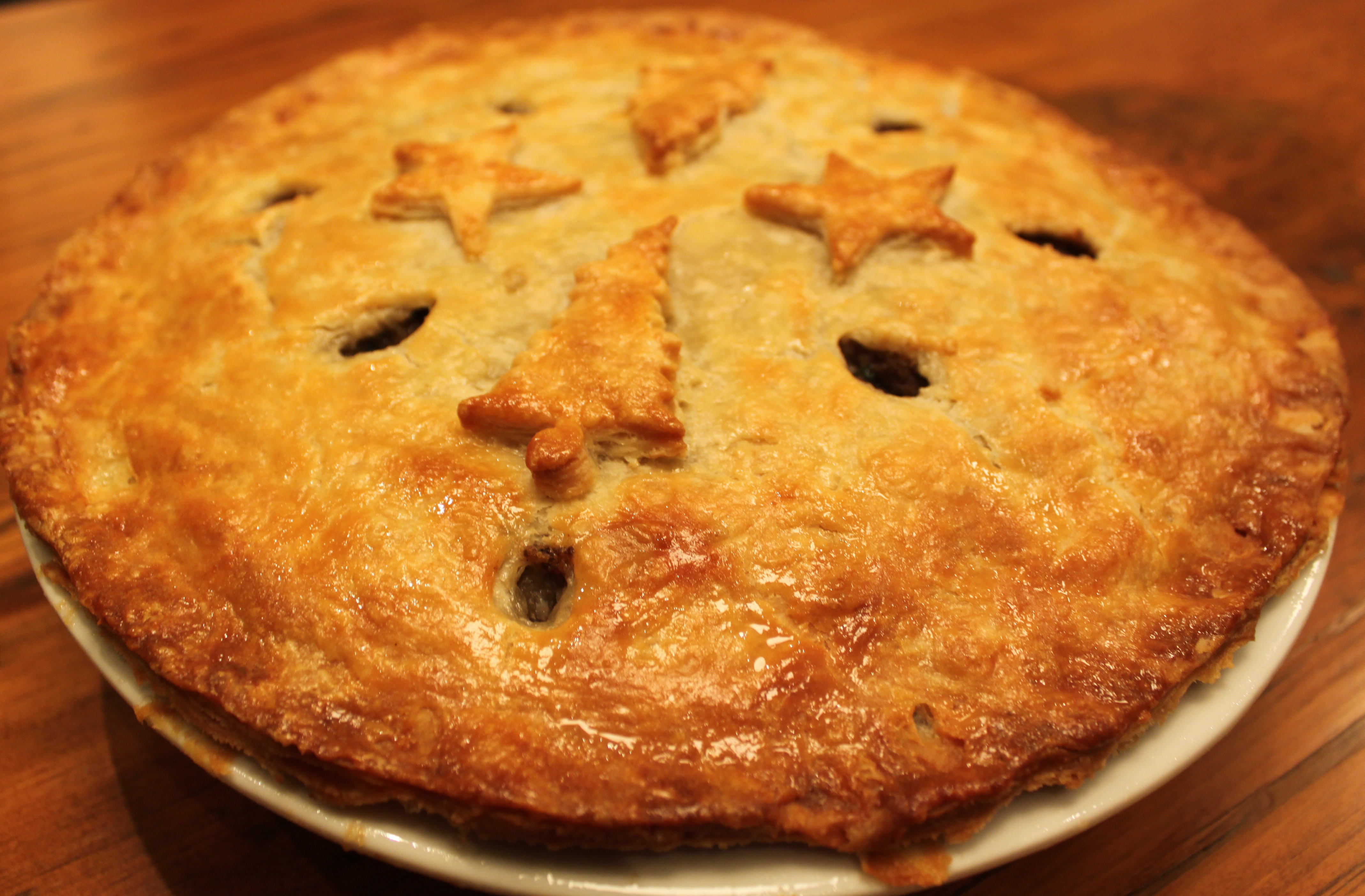
Tourtière
If you’ve only had the supermarket variety, you could be forgiven for thinking that tourtière is the French word for torture. The Christmas Eve tradition of eating the previously frozen, dried-out discs of often-under-spiced and over-cooked ground pork is a chore many people with a French Canadian branch somewhere on their family tree have learned to dread.
But good tourtière is a treat that deserves a wider audience. You can make tourtière with beef or veal but there’s nothing, to my mind at least, that tops quality pork, delicately spiced with summer savory, cloves and cinnamon and baked in a thin crust of light and ever-so flaky pastry. You really don’t need to have any French connections to look forward to this on Christmas Eve (or any given Sunday, for that matter).
Good pork makes a difference. Ours is from a heritage breed (Large Blacks) lovingly raised on a farm close to home. The spice levels are important as well. I like quite a bit; it just seems more like Christmas when you cut into the pie and the air fills with the smell of cinnamon and cloves. But by all means, tone it down a little if you like (but not too much, under-spiced tourtière is bland).
But let me go back to the pastry for a minute because this can really make or break the dish: It must be flaky. Tourtière is already stuffed with meat and bread and it can’t take a heavy load of dough on top of that without becoming unbearably rich. Many people have pie crust recipes they swear by. Here’s mine.
Flaky pie pastry
Here’s the recipe I use for pie pastry. I roll it out until it’s very thin (I have a ball leftover after I roll out the top and bottom for a pie). L hates the idea that there is lard in this, but it is essential. (I have a friend who thinks lard just needs a new name and a good marketing firm. I tend to agree.)
Sugar plums
It’s doubtful in this day and age that many children go to bed Christmas Eve with visions of sugar plums dancing in their heads. These old fashioned sweets just haven’t adapted to the age of high-fructose corn syrup. These days, sugar plums are for adults.
In fact, sugar plums are so old fashioned, they’re a novelty. One bite takes you back, not to your own childhood, but to your grandmother’s. These are incredibly easy to make using a food processor, but would have been quite a chore in the old days. Dried figs, prunes and apricots mixed with spices, almonds, a little sugar and some honey give sugar plums instant Victorian credibilty. This must be what Charles Dickens tasted like, not that you’d want to taste Charles Dickens.
Earthy, chewy, fruity, these sweets (and they are very sweet) are the candy cousins to that other ancient Christmas treat, fruitcake. Sleigh bells ring, are you listening?
Help wanted
If you’re like me, you sometimes wonder how come getting ready for even a small dinner party can be an all-day affair that leaves the kitchen looking like the Third Panzer Division stopped by for a hasty meal and didn’t do the dishes.
How is it that a TV chef can do it all – three, sometimes four elegant courses, not a drop of splattered oil on their shirts, never mind life-threatening cuts and burns on their exposed parts – in half an hour? I know they are much better cooks than I am and the shows are edited for time and they have help. But I really didn’t know just how much help until the other day when I stumbled across this revealing article.
It turns out that those “3o-minute” meals, on the Food Network at least, require 15-20 people working in backstage kitchens to prepare the food for the chef out in front of the camera. Each meal is decided on months in advance and “simple” recipes are worked on for up to 15 weeks before taping.
With that kind of help I might even have time to make dessert.